

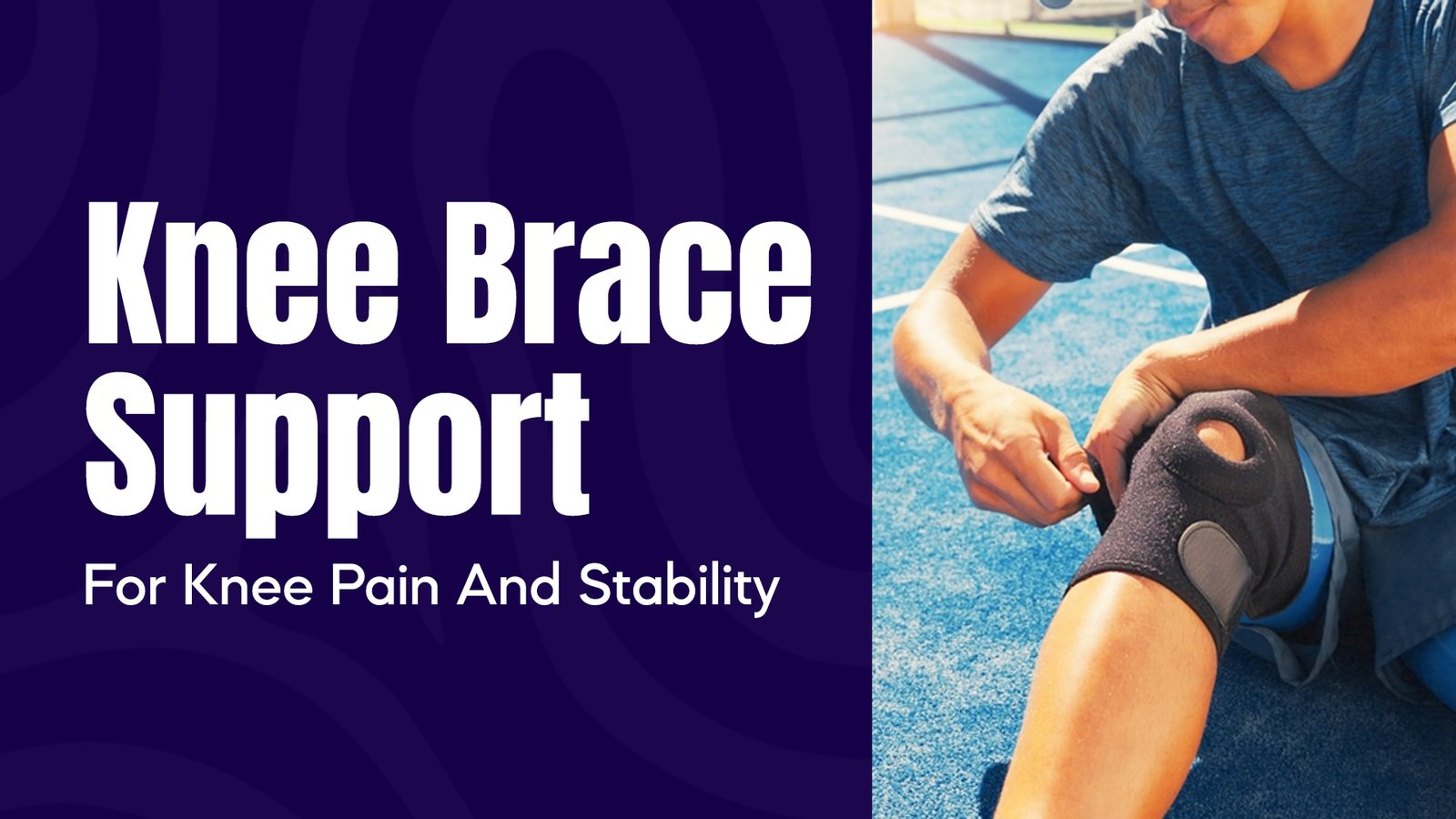
Understanding Knee Pain and Why Stability Matters
Knee pain can make simple daily activities difficult. Walking, standing, or climbing stairs may feel uncomfortable or unsafe. In many cases, the problem is not just pain but also weakness or instability in the knee joint.
Instability means your knee does not feel steady. Some patients describe it as the knee “giving out.” This can increase the risk of falls and slow down recovery from injury or surgery. Getting proper support early can help improve safety and confidence in movement.
What Is a Knee Brace and How It Helps You
A knee brace is worn around your knee to support the joint. It helps keep your knee in the correct position and limits movements that may cause pain or further injury.
Some knee braces are soft and flexible, while others have a stronger frame. Braces with hinges are designed to control how your knee bends and moves. These are often recommended when more support is needed.
Using a knee brace can help reduce pressure on your knee. It also allows you to move more safely during daily activities.
When You May Need a Knee Brace
Your doctor may recommend a knee brace if you have certain conditions or symptoms.
Ligament injuries
If you have injured ligaments such as ACL, PCL, MCL, or LCL, your knee may feel unstable. A brace can help support the joint during healing.
After knee surgery
Following surgery, your knee needs protection. A brace helps control movement and supports recovery.
Osteoarthritis
If you have arthritis in your knee, you may feel pain and stiffness. A brace can help reduce pressure on the joint and improve walking.
Recovery and rehabilitation
During recovery, your knee may still be weak. A brace provides support as you gradually return to normal activity.
Types of Knee Braces You May Be Prescribed
Not all knee braces are the same. Your doctor will choose the type based on your condition.
Some braces are designed for mild support. Others are more structured and provide stronger stability. Hinged braces are commonly used for ligament injuries or after surgery because they control movement.
Many braces are prefabricated, which means they are already made but can be adjusted to fit your knee properly.
How Knee Braces Help Improve Daily Life
A knee brace can make daily activities easier and safer.
It helps reduce pain by supporting the joint and lowering strain. It improves balance and stability, which can reduce the risk of falling. Many patients feel more confident walking or standing when wearing a brace.
For people recovering from injury or surgery, a brace can support healing by limiting harmful movements.
Do You Qualify for a Knee Brace Under Medicare
If you are a Medicare patient, coverage depends on your medical condition and your doctor’s evaluation.
Your doctor must confirm that you need a knee brace for medical reasons. This is called medical necessity. The diagnosis must clearly explain your knee problem, such as instability, injury, or arthritis.
You will also need a prescription from your doctor. Without it, Medicare will not cover the brace.
What You Need Before Receiving a Knee Brace
To receive a knee brace through Medicare, a few important steps must be completed.
Your doctor must examine you and document your condition. This visit is often called a face-to-face encounter. During this visit, your symptoms and limitations are recorded.
Your doctor will then write an order for the knee brace. This order must be completed before the brace is delivered.
Clinical notes must support why you need the brace. These notes explain your condition and how the brace will help.
What to Expect From Your DME Supplier
A DME supplier is the company that provides your knee brace. Their role is to make sure everything is correct before you receive the device.
They review your prescription and documentation to confirm it meets Medicare requirements. They also help ensure the brace is properly fitted to your knee.
You will receive instructions on how to wear and adjust the brace. This helps you use it safely and effectively in your daily routine.
Step-by-Step Process to Get Your Knee Brace
Understanding the process can help you know what to expect.
First, your doctor evaluates your knee and decides if you need a brace. Then, a prescription and supporting documents are prepared.
Next, the supplier reviews your information to make sure everything is complete. Once approved, the brace is delivered and fitted to your knee.
After receiving the brace, you may have follow-up visits to check your progress and make adjustments if needed.
Tips for Using a Knee Brace Safely
Always follow your doctor’s instructions when wearing a knee brace. Make sure it fits properly and is not too tight or too loose.
Wear the brace during activities as recommended. Some patients may need it only during movement, while others may wear it longer.
Check your skin regularly for irritation. If you notice discomfort or problems, inform your healthcare provider.
Conclusion
A knee brace is a medical support device that helps stabilize the knee, reduce pain, and improve movement. It is often used for ligament injuries, arthritis, or after surgery. Medicare may cover a knee brace if your doctor confirms medical need and proper documentation is completed.
FAQs
1- Do knee braces really help knee pain?
Yes, they help support the knee and reduce strain, which can lower pain during movement.
2- What type of knee brace is best for instability?
Hinged knee braces are often used because they provide strong support and controlled movement.
3- Will Medicare pay for a knee brace?
Medicare may cover it if your doctor confirms medical need and all required documents are completed.
4- Do I need a prescription for a knee brace?
Yes, a prescription is required for Medicare coverage.
5- When should you wear a knee brace?
This depends on your condition. Your doctor will guide you on when and how long to wear it.
6- Can you wear a knee brace all day?
Some patients can, but it depends on medical advice. Always follow your doctor’s recommendation.
7- What condition requires a knee brace?
Conditions like ligament injuries, arthritis, and post-surgical recovery may require a brace.
8-How long does it take to receive a knee brace?
It depends on how quickly your documents are completed and reviewed.
Author Bio
Jennifer Brown is a healthcare content specialist with experience in DMEPOS guidelines and patient education. She focuses on helping patients understand medical equipment, coverage requirements, and proper usage in a simple and clear way.